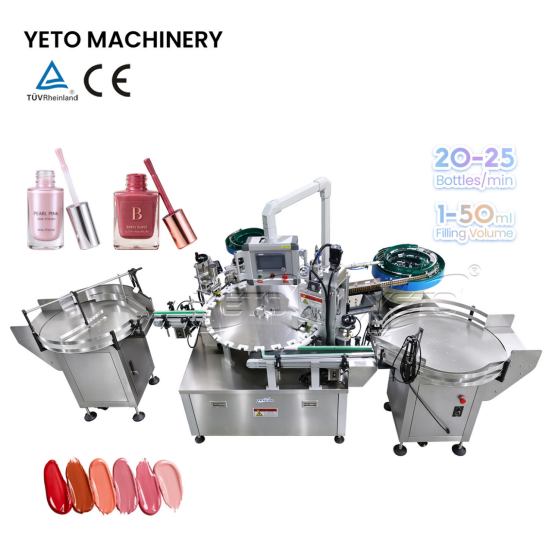
Nail Polish Filling & Capping Machine — rotary table, peristaltic pump, twin vibratory bowls
Rotary Integrated Structure
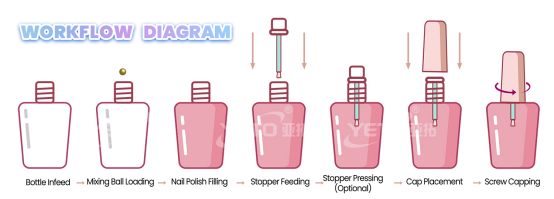
The machine is centered around a rotary turntable, with a bottle sorting turntable on each side: empty bottles enter on the left and finished products exit on the right. The bottles pass through six stations in sequence—mixing ball loading, filling, stopper feeding, stopper pressing, cap placement, and screw capping—without requiring manual line transfer midway. For nail polish, a product with small bottles, multiple processing steps, and a formulation prone to separation, this single machine minimizes both floor space and labor.
Why Use a Peristaltic Pump
Nail polish is highly viscous, contains color pigments, settles easily, and often contains volatile solvents. A peristaltic pump allows the product to contact only the tubing, not the pump body. When changing colors, the tubing can be replaced directly without disassembling the pump for cleaning, avoiding cross-contamination and eliminating the hassle of solvent residue. Filling volume is servo-controlled, enabling stable filling even at small doses.
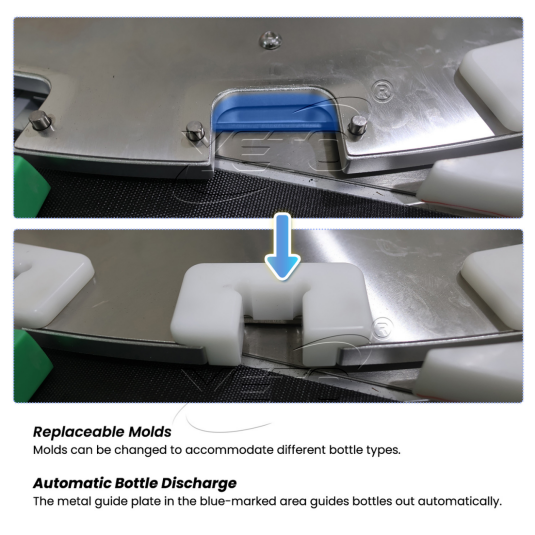
Interchangeable Molds for Different Bottle Shapes
The bottle holders on the turntable are removable molds, customized to the customer’s bottle diameter and height. When changing bottle shapes, only the mold and guide parts need to be replaced, without modifying the entire machine.
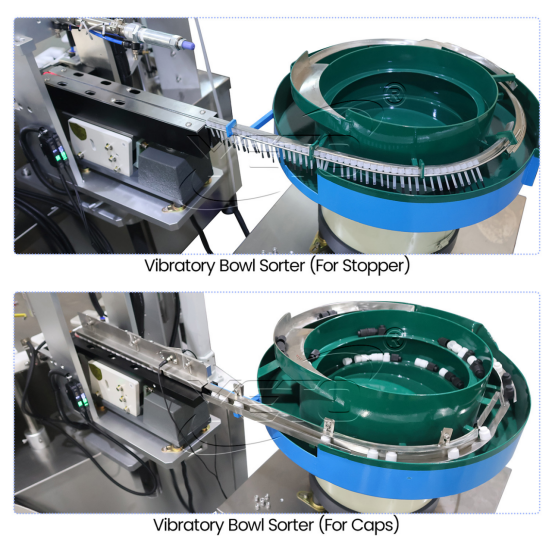
Dual Vibratory Feeders for Automatic Feeding
One vibratory feeder sorts and feeds the inner stoppers, and another sorts and feeds the outer caps. The system automatically replenishes when material is low and automatically rejects misaligned caps, so no manual cap placement is needed at the station.
How the Eight Stations Work
1. Bottle sorting and feeding: The bottle sorting turntable feeds empty bottles one by one into the bottle holder blocks.
2. Mixing ball loading: Steel balls are automatically inserted to be shaken after filling to prevent settling.
3. Peristaltic pump filling: Servo-controlled quantitative filling; the product passes only through the tubing.
4. Inner stopper feeding: The vibratory feeder delivers inner stoppers, which are inserted into the bottle neck.
5. Stopper pressing: The inner stopper is pressed into position. This station can be enabled or disabled as needed.
6. Outer cap placement: Outer caps are automatically dropped by the second vibratory feeder.
7.Screw capping: The servo capping head tightens the cap to the preset torque, ensuring consistent, leak-free sealing.
8. Outfeed conveying: Finished products are gently discharged onto the outfeed line and automatically conveyed to the receiving tray.
Pre-Shipment Machine Inspection
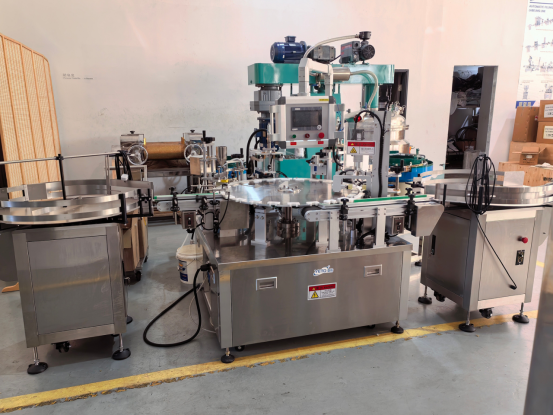
Before packaging, the entire machine is assembled, powered on, and connected to air. It is run with the samples sent by the customer, and a video is sent to the customer for confirmation. Only after confirming that capping torque, filling volume, outfeed, and other functions are normal do we disassemble and pack the machine.
01 Remove movable parts first and pack them separately
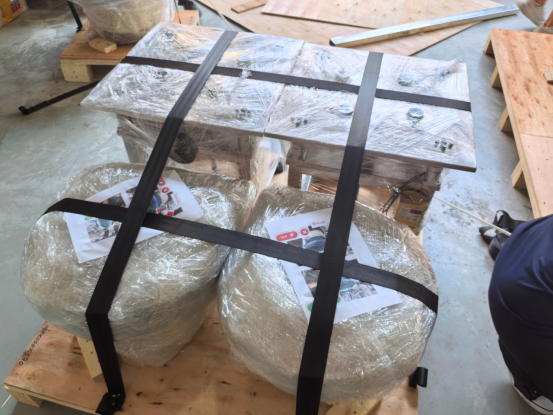
The two vibratory feeders and the left and right bottle sorting machines are exposed and prone to impact. They are first removed from the main machine, wrapped separately in bubble wrap, and then wrapped in stretch film.
A diagram showing how to remove the vibratory feeder is attached to each feeder to prevent customers from removing it improperly and damaging it.
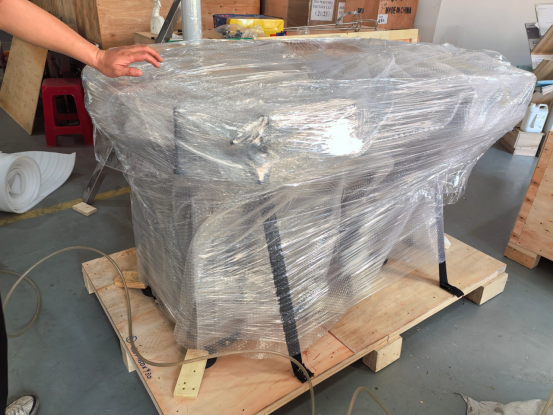
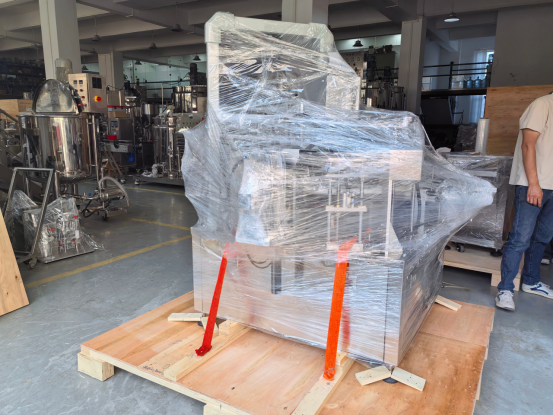
02 Wrap the main machine in bubble wrap, then stretch film
Protruding parts such as the touchscreen, capping head, and filling head are first wrapped in a layer of bubble wrap for impact protection. The entire machine is then wrapped in stretch film, sealing the corners, control panel, and exposed cylinders inside the film to protect against moisture and scratches.
03 Place on a plywood pallet and tighten straps in a cross pattern
The entire machine is lifted onto an export-standard plywood pallet. Wooden blocks are placed under the four bottom corners to position it, and strapping is passed up from under the pallet and crossed in a cross pattern to secure the machine and pallet as one unit.
After the straps are tightened, the machine cannot slide forward, backward, left, or right on the pallet. Forklifts can only lift the pallet, not the machine directly.
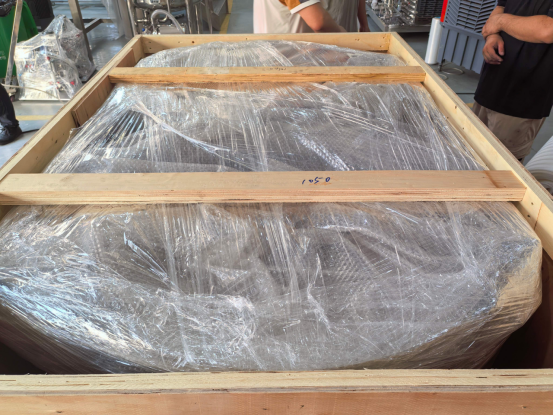
04 Load into a plywood crate and add a top cross support
The palletized machine is pushed into a plywood crate, and the gaps around the crate are filled with EPE foam. Two horizontal wooden beams are nailed across the top inside the crate to press down on the upper part of the machine, preventing upper cargo from pressing down and directly hitting the machine during sea stacking.
After the crate is sealed, “MADE IN CHINA” and the shipping marks are spray-painted on the outside, and the machine is then handed over to the freight forwarder for port entry.